January 23rd, 2026
v1.6.0: Introducing associated domain discovery & key platform enhancements
This release expands attack surface visibility with Associated Domain Discovery, improves credential monitoring workflows, and delivers multiple usability, integration, and reliability improvements across the platform.
✨ New Features
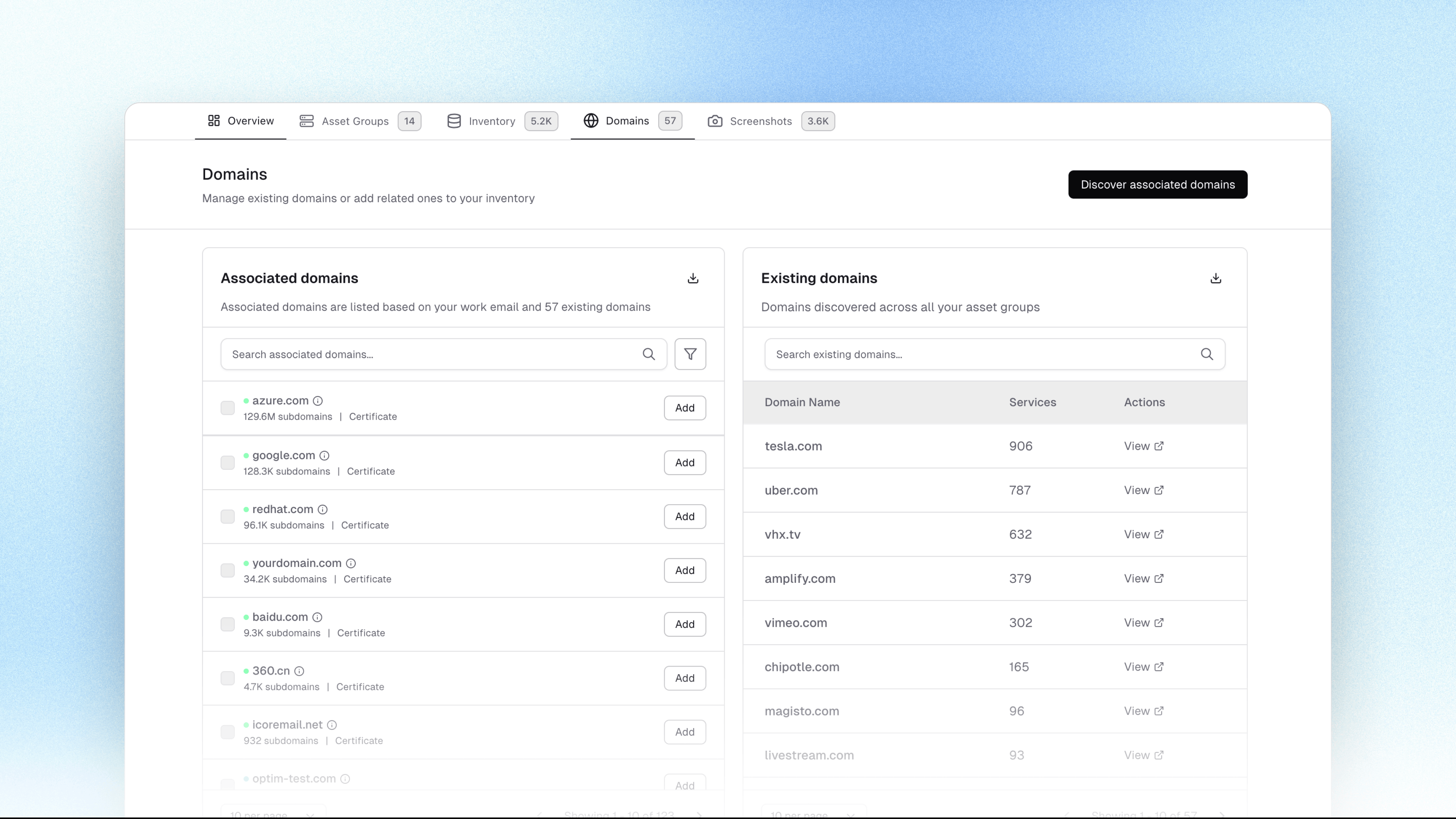
🌐 Associated Domain Discovery
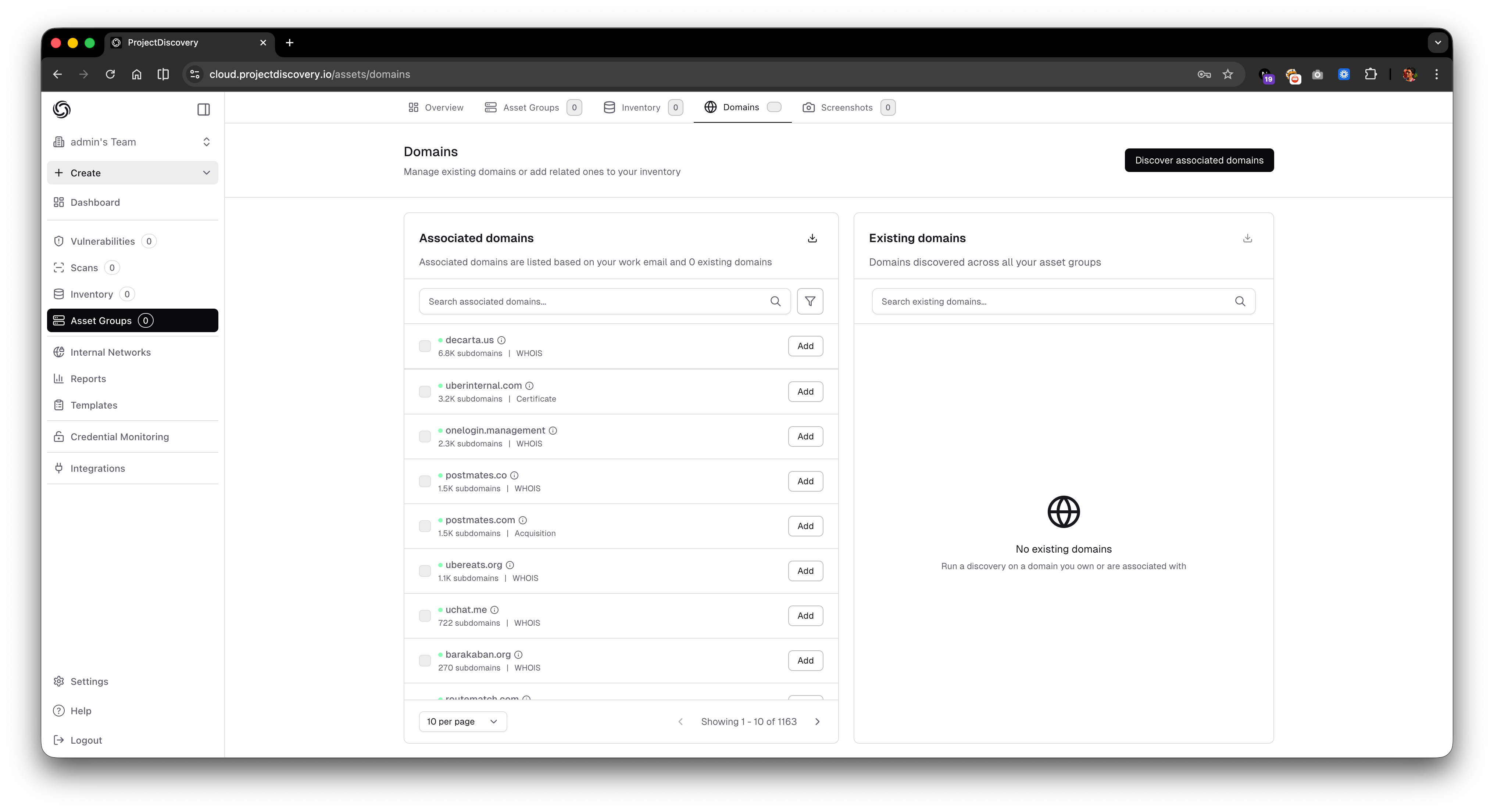
Discovers domains related to your verified assets, helping identify owned, subsidiary, or infrastructure-linked domains that were not explicitly added.
Associated domains are identified using multiple intelligence signals, including:
Acquisition history, covering subsidiaries, mergers, and related corporate entities
Certificate history, using shared or historical SSL and TLS certificates from certificate transparency logs
WHOIS history, identifying common registration and ownership patterns
Results are grouped by association source, allowing users to understand why a domain is linked and assess the relevance of the association.
Helps uncover subsidiary domains, legacy assets, and infrastructure-linked domains that could otherwise remain undiscovered.
Available to all signed-up users on the Cloud Platform (Non-Enterprise users are limited to 10 associated domains per query).
Access the feature from the Assets section and to get started.
Refer to our Documentation for more details.
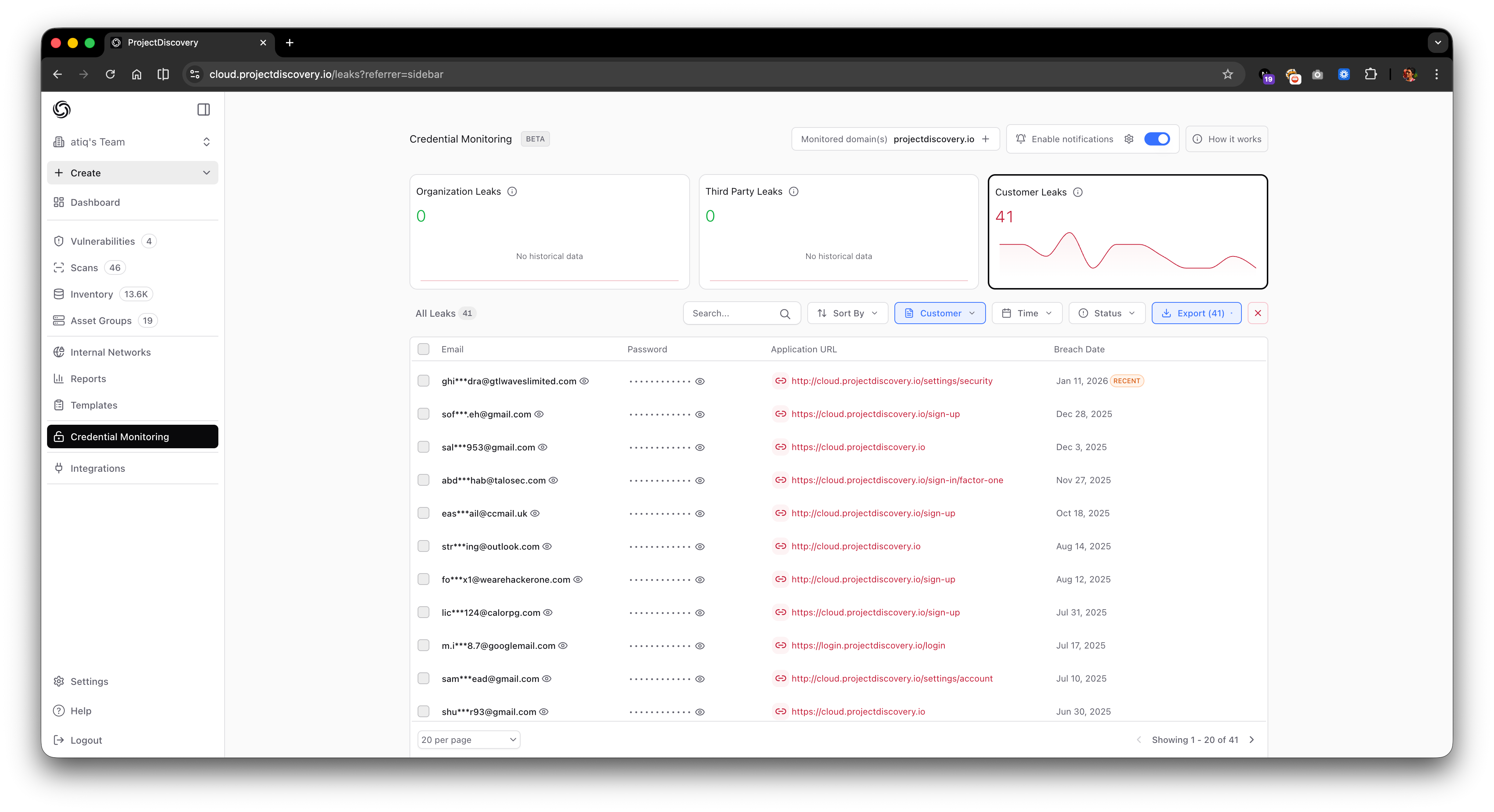
🔐 Credential Monitoring Enhancements
Added ability to view exposed customer credentials with improved UX, to speed up investigation and triage.
The Export API now returns unmasked passwords, enabling:
Bulk credential analysis
Integration with external tools
Offline investigation and correlation workflows
🔗 Integrations
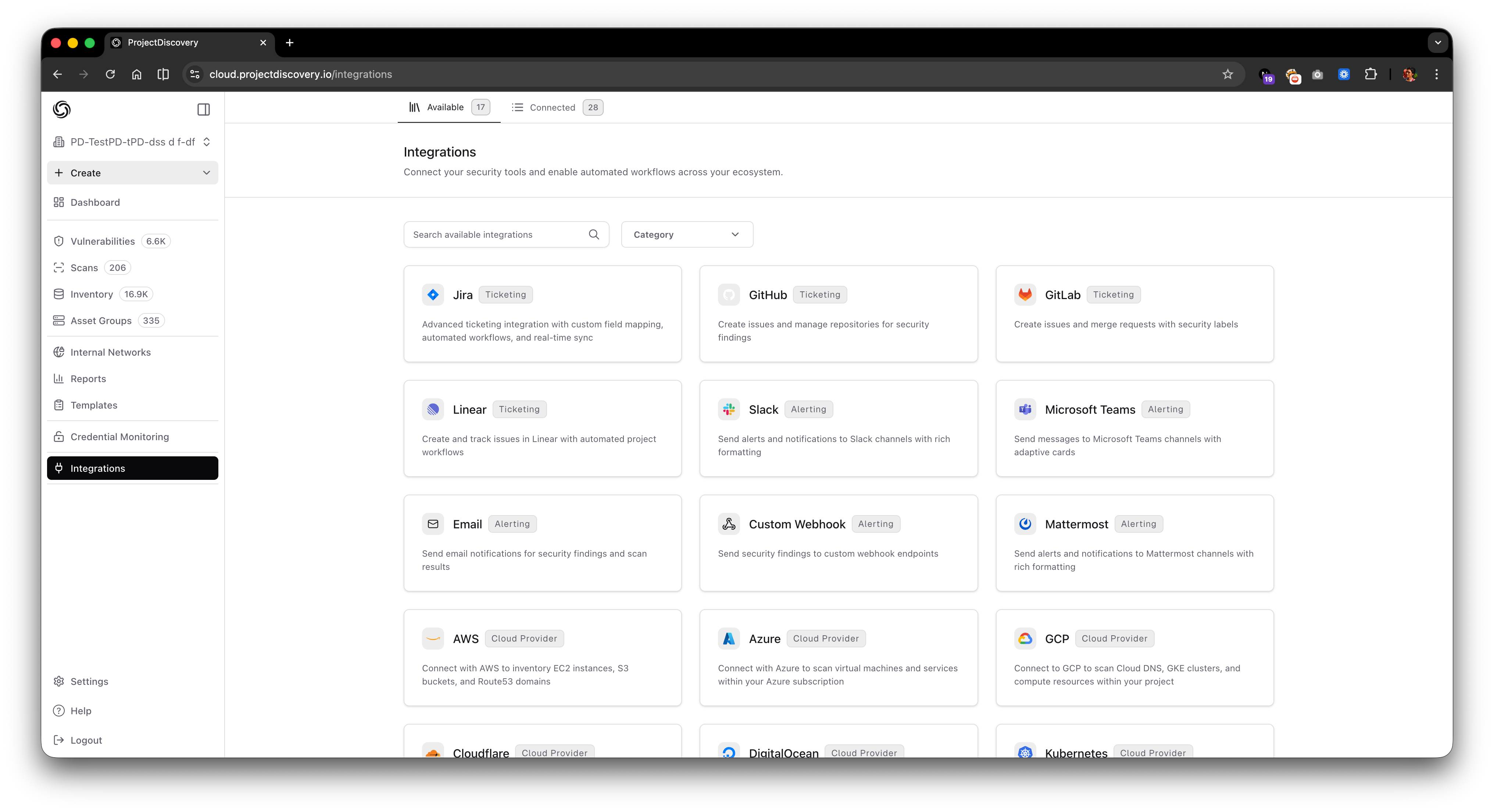
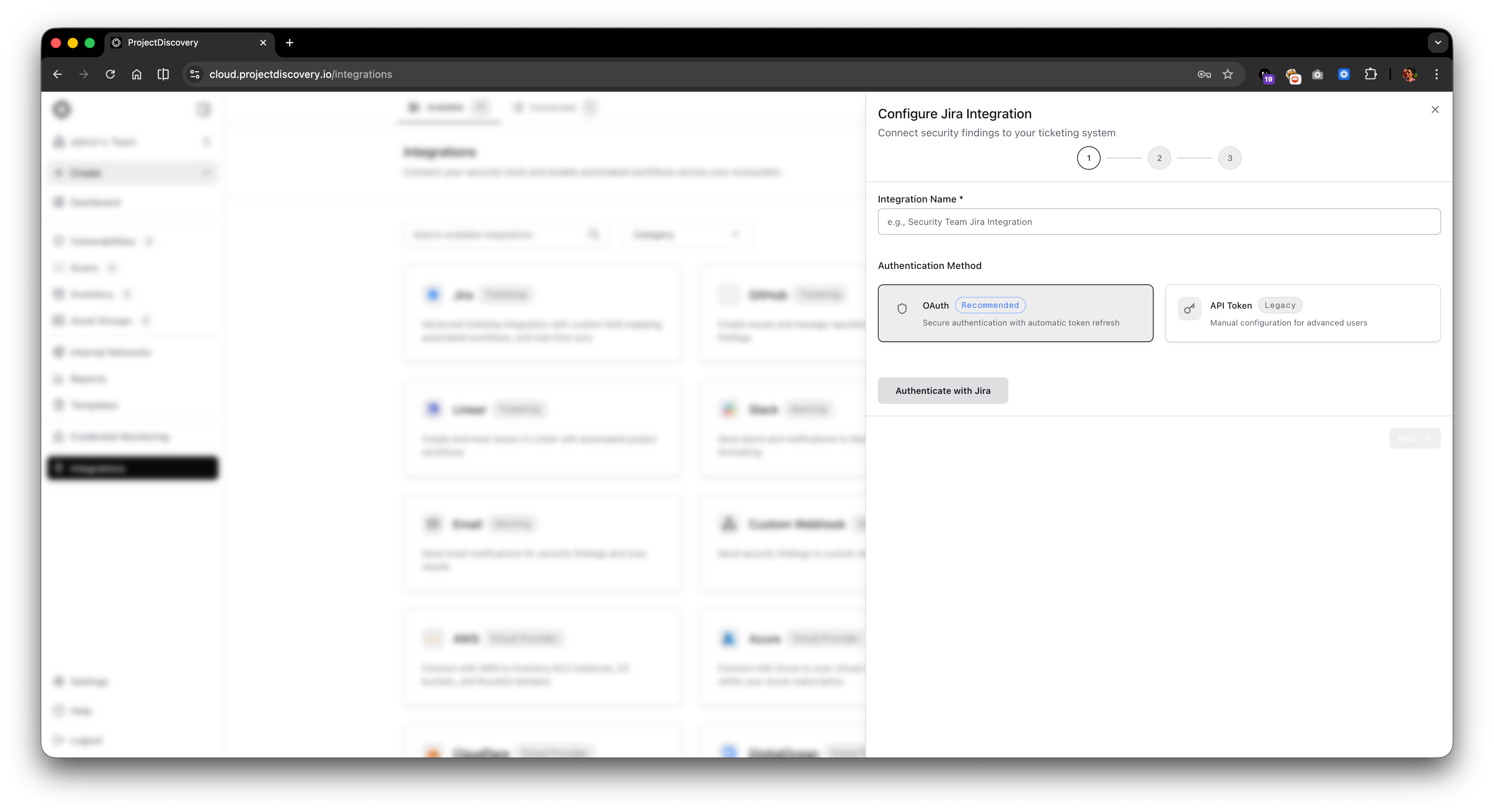
Updated Integrations page with improved layout and configuration flow.
Jira Integration enhancements
Added OAuth-based authentication, simplifying setup and ticketing workflows.
Introduced configurable field mapping between ProjectDiscovery and Jira, allowing users to control how vulnerability and asset data is populated when creating tickets.
Access integrations here:
https://cloud.projectdiscovery.io/integrations
🛠 Improvements
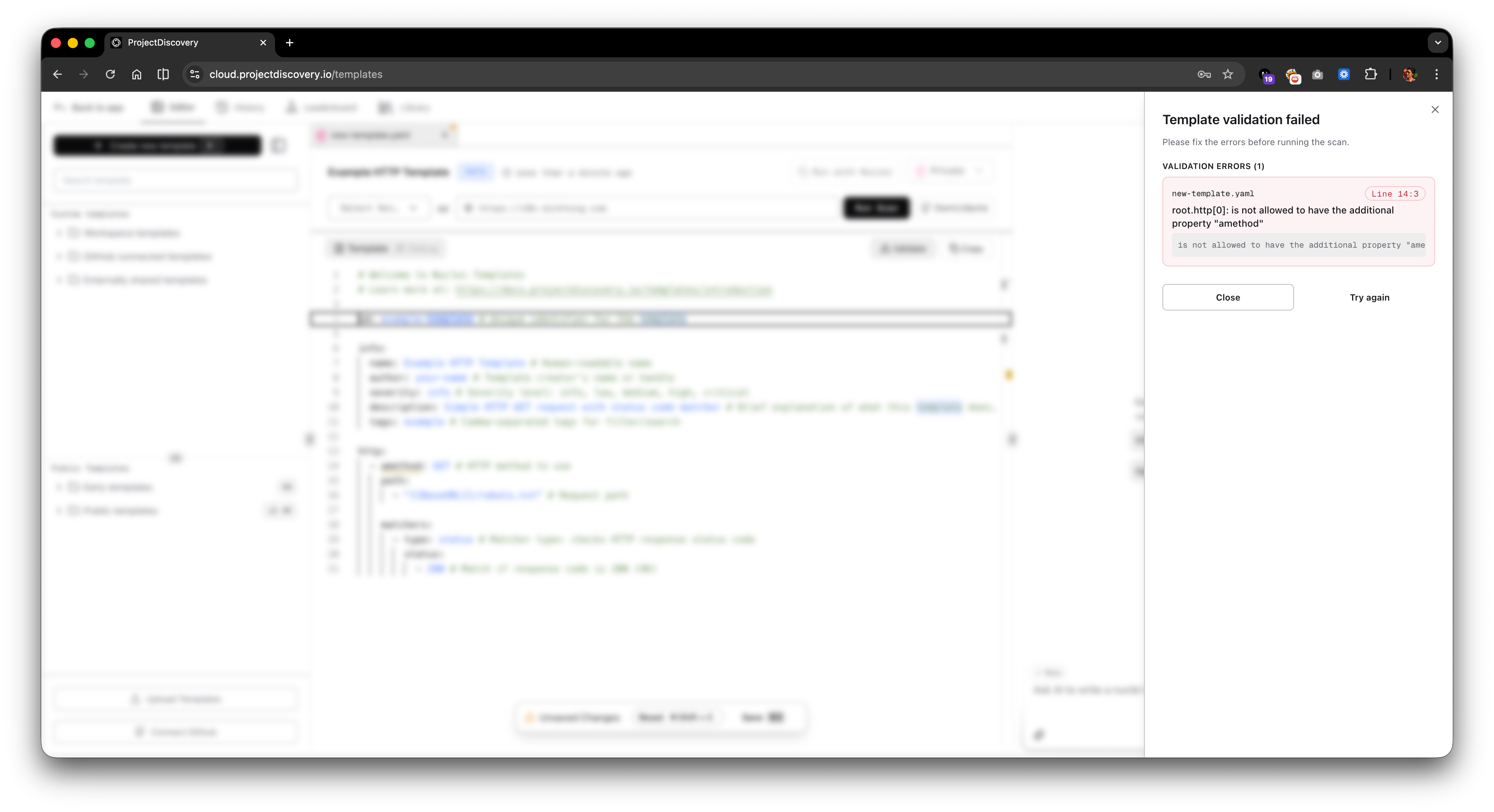
Added real-time feedback for invalid Nuclei template create, upload, and test actions, improving usability and reducing failed submissions.
Fixed overlapping issues on the vulnerability timeline when displaying new data points such as issue resolve time, improving clarity of vulnerability lifecycle tracking.
Resolved Open Graph image content loading issues on the Template Library page.
Fixed multiple minor UI/UX issues on the Template Profile page.
🔧 Maintenance Update: UI & Platform Fixes
We’ve also rolled out a minor maintenance update focused on usability improvements and bug fixes.
Added Light Mode / Theme support across the platform.
Theme preferences can be updated here.
Introduced a design system to standardize UI components and visual patterns, ensuring a consistent and predictable user experience across the platform.
Fixed issues with Censys integration in subfinder.
Made minor design improvements to:
Leaderboard UI
Agent installation experience