April 18th, 2025
v1.2: New Host page, improved template editor and many more
We’re excited to roll out a fresh update packed with powerful enhancements across vulnerability management, asset workflows, and template generation! This release focuses on improving visibility, flexibility, and customization across the app.
Vulnerability Management
Custom severity for templates and vulnerabilities: Gain more control over your security workflow with the ability to customize severity levels for both templates and identified vulnerabilities, adapting them to your organization's specific risk tolerance.
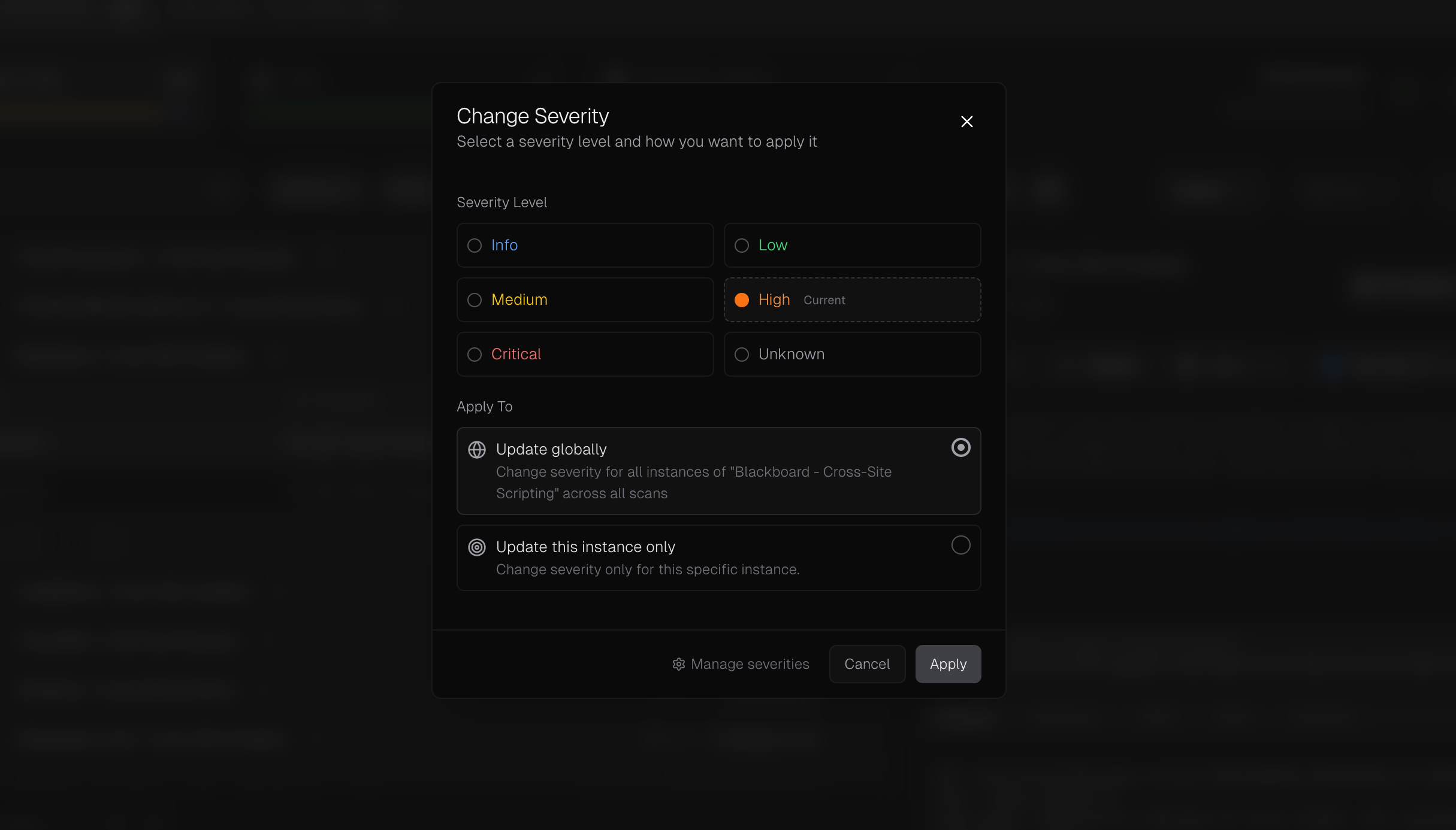
Severity customization for vulnerability alerting: Customize Slack, Teams, and email alert notifications based on vulnerability severity levels
New vulnerability status (triaged): Track vulnerabilities more easily across key stages of remediation with our new ‘triaged’ status, allowing security teams to mark issues that have been reviewed but where remediation has not begun.
Custom reporting link reference: Connect vulnerability findings to external resources like ticketing, documentation, or policies with custom links
Asset Management
Asset overview (early version): View your data in different ways with our new multi-format visualization feature, giving you flexibility in how you explore your infrastructure’s exposure, such as detected ports and technologies. This early version is just the beginning, with more data points, visualizations, and improvements coming soon.
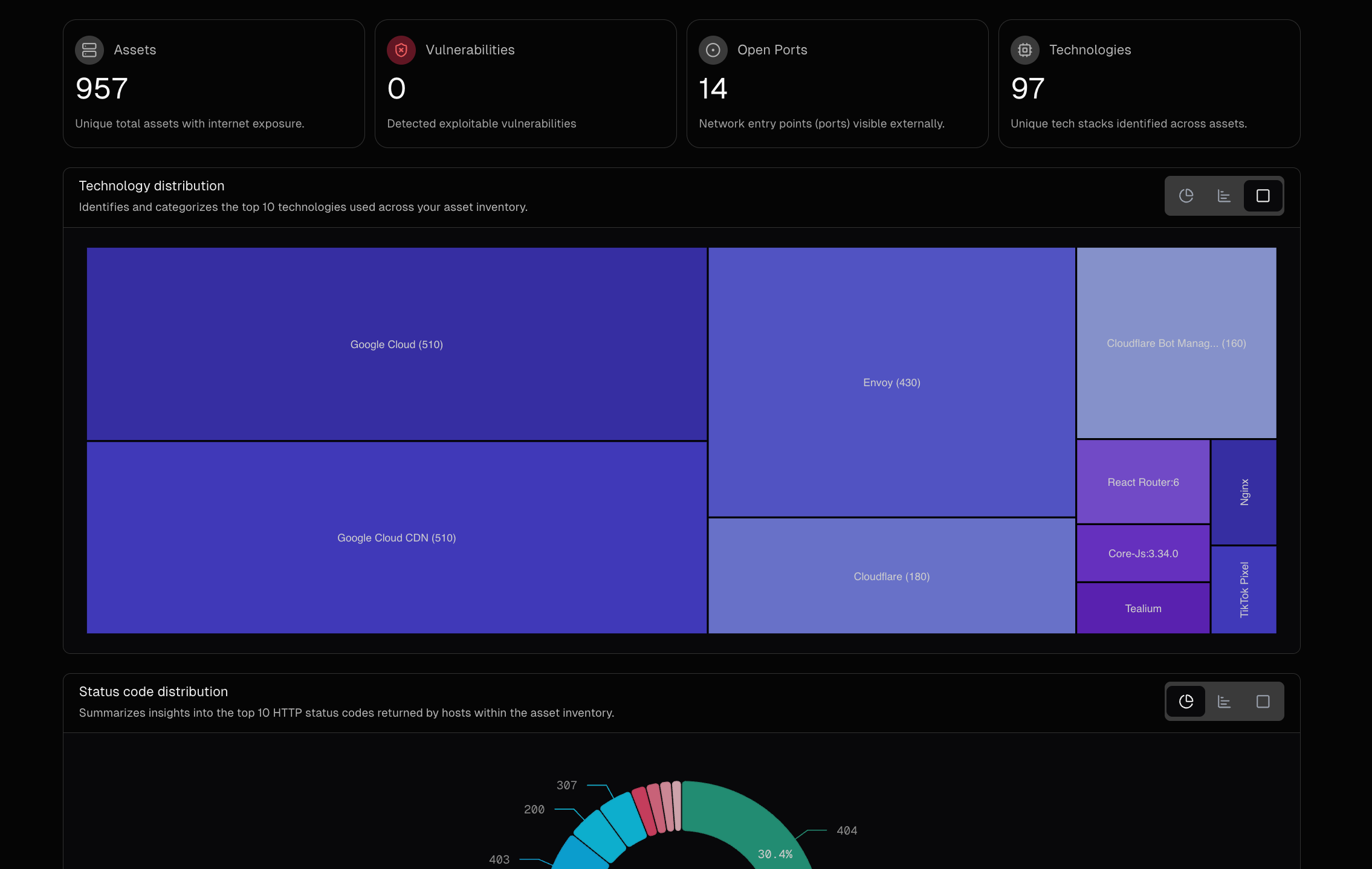
Grouped asset view: Efficiently analyze assets with our new grouped view that correlates multiple data points, helping you identify patterns and relationships across your infrastructure.
Bulk asset deletion by filters: Bulk delete assets using filters, enabling you mass remove assets that meet specific criteria.
Bulk / single label removal support: We've added the ability to remove labels in bulk or individually, giving you more flexibility in organizing and managing your resources.
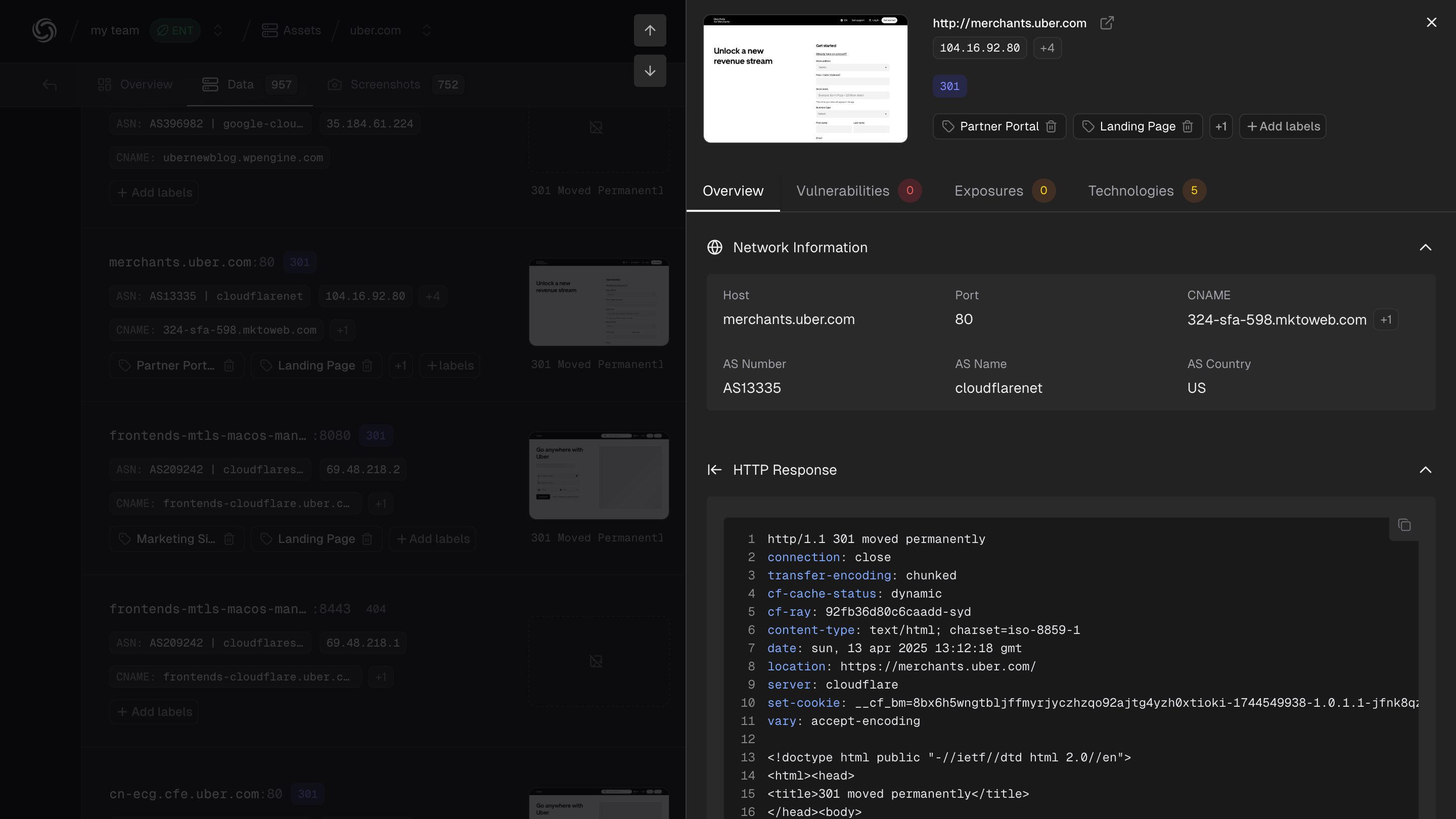
Asset host view: View detailed host-level information such as response headers, network information, and certificate information by clicking on each asset
Template Features
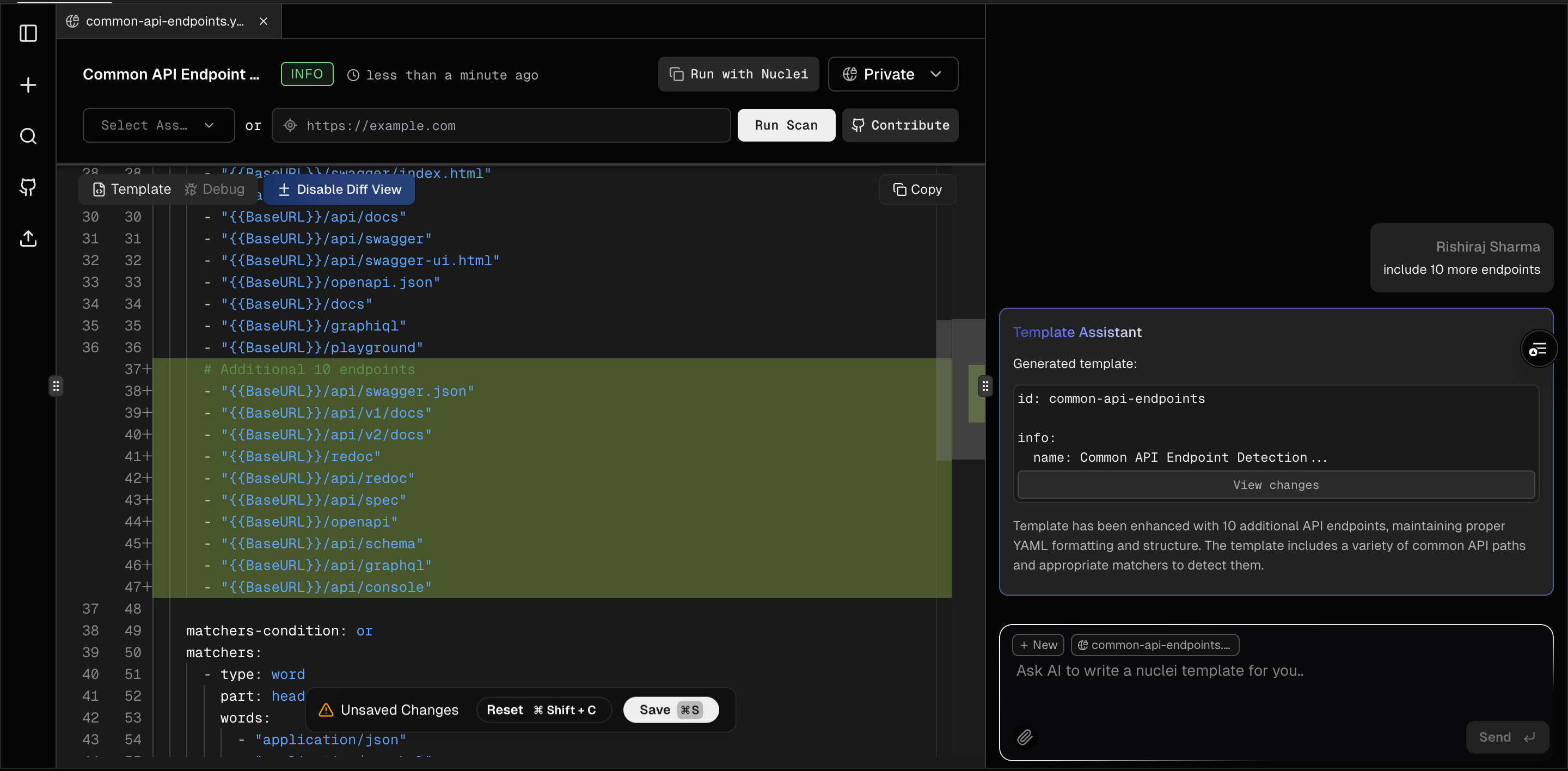
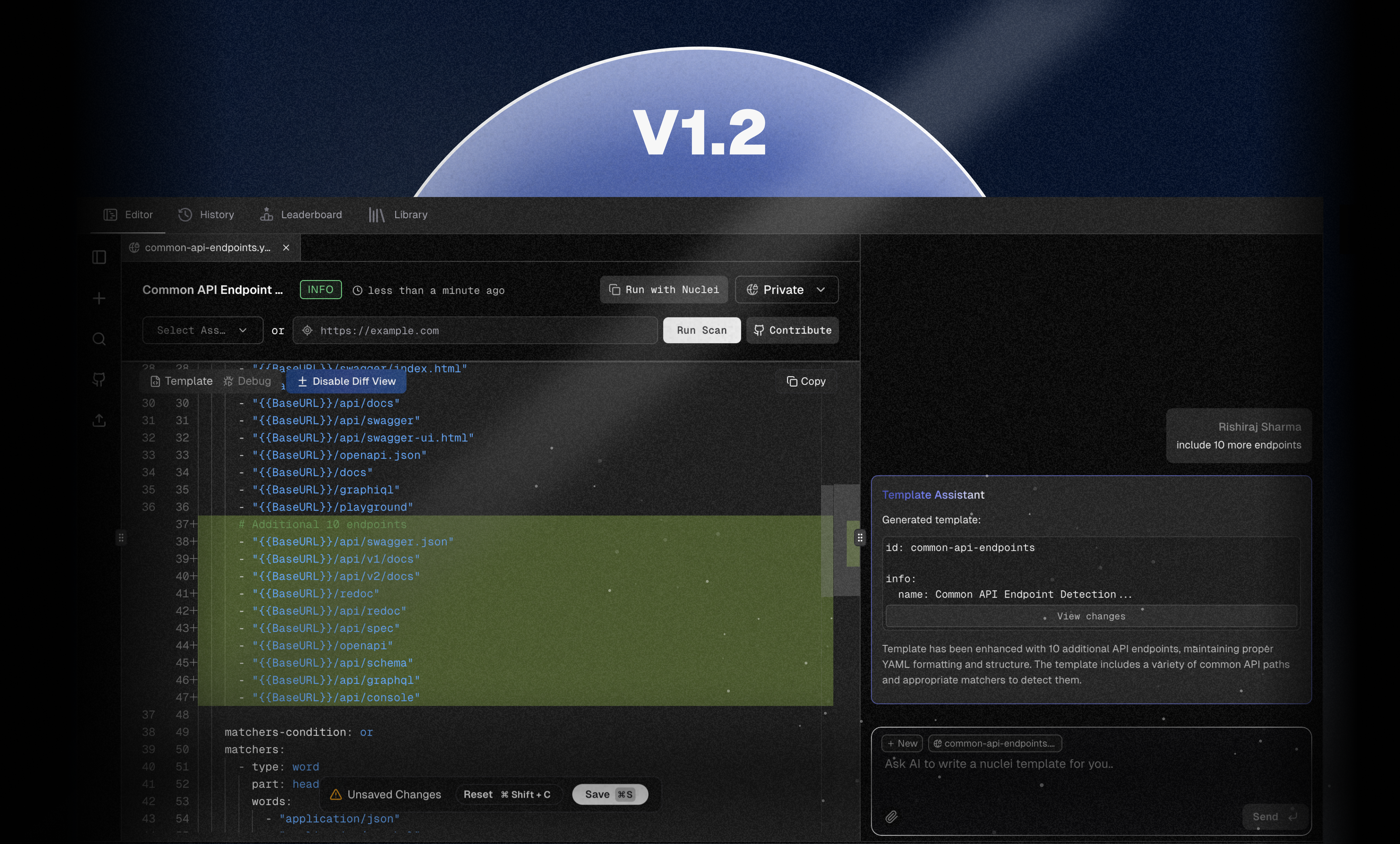
When we first launched the ProjectDiscovery Cloud Platform, it was centered around our Nuclei template editor, powered by OpenAI APIs and several internal tools to handle lint errors and ensure accuracy with the Nuclei schema. Today, we’re releasing the second major update to this interface, with a primary focus on making iterative editing faster and smoother. The editor now includes integrated chat, enabling a real-time, interactive conversation with the AI editor while editing templates. This allows for a more dynamic and efficient editing experience. We’ve also added support for attaching images directly within the editor, simplifying your template development and debugging process.
Interactive chat assistant for template creation and modification with diff view: Get real-time, interactive help while building templates, with side-by-side comparisons that make tracking changes effortless.
AI-powered auto-complete suggestions for template fields: Boost productivity with intelligent auto-complete suggestions that learn from common template patterns and streamline your workflow.
Multi-tab editing with local cache for unsaved templates: Work on multiple templates at once without losing progress, thanks to our new local caching system that keeps your unsaved changes safe.
Multiple target inputs with improved debugging experience: Test your templates against multiple targets simultaneously, with enhanced debugging tools that simplify troubleshooting and speed up the process.
Template sharing with restricted access and custom expiration: Securely share templates with team members or clients, featuring fine-grained access controls and automatic expiration dates for added security.
Run with Nuclei: Easily copy the Nuclei CLI command from the editor to run the template locally with Nuclei. This feature is especially useful for scanning a list of targets directly from your machine.
Vulnerability Library (early version)
We’re excited to announce the early release of a unified interface for vulnerabilities, making it easier to browse and explore both CVEs and non-CVE vulnerabilities in one place. We’re still iterating, and more improvements are coming soon. Stay tuned for further updates.
New page for browsing CVEs and Nuclei templates: Access a comprehensive collection of Nuclei templates in one convenient location. Currently focused on templates, with CVEs coming soon.
Advanced search and filtering: Quickly find exactly what you need with powerful search capabilities. Mix and match filters to get precise, targeted results.
Detailed exploit pages: Dive into well-organized, in-depth information on specific exploits, including technical breakdowns, impact assessments, and actionable remediation steps.
Other Improvements
Bulk / single label removal support: Remove labels in bulk or individually, giving you more flexibility in organizing and managing your assets
Discovered domains list under usages section: Automatically track domains discovered during scanning with a convenient list in the usages section, helping you maintain awareness of your growing attack surface
Self-Hosted Jira Integration for Vulnerability Tracking: Integrate with self-hosted Jira instances to automatically create tickets from vulnerability findings